
The short answer
A green burial places the body in a natural burial ground within days or weeks, while cremation lets you decide about the ashes in your own time. Both can give you a place to visit, because ashes can be buried at a natural burial ground. Costs, faith and family wishes often decide it.
If you are planning ahead, choosing between burial and cremation can feel like a big decision. Either can end at a natural burial ground, because ashes can be buried there too. This guide sets out the main differences between a green burial, also called a natural or woodland burial, and cremation.
Decide if you can, or at least say what you would like. The SunLife Cost of Dying Report 2026 found that 53% of people who arranged a funeral did not know whether the person had wanted a burial or a cremation.
What does each involve?
A green burial. The body is buried in a natural burial ground, in a biodegradable coffin or shroud, usually without embalming. Members of the Association of Natural Burial Grounds agree to accept embalmed bodies only in exceptional circumstances. The grave may be marked with a tree or a simple marker, or not at all. See what a green burial is for more.
A cremation. The body is cremated, with or without a service beforehand. A cremation without a service or mourners is called a direct cremation. The ashes are returned to the family, who can keep, scatter or bury them.
How does the timing differ?
A burial needs to happen fairly soon after death, usually within days or a few weeks, once the death has been registered and the paperwork is in place. The funeral and the burial are one event.
With cremation, the farewell can be split in two. The cremation happens first, and the family can hold a gathering or bury the ashes weeks or months later, when people are ready. Some people find this gentler; others prefer a single day.
How do the costs compare?
The SunLife Cost of Dying Report 2026 gives these UK averages:
| Type of funeral | Average cost |
|---|---|
| Simple attended burial | £4,758 |
| Simple attended cremation | £3,518 |
| Direct cremation | £1,628 |
These cover all kinds of burial, not green burial in particular. The structure of the cost also differs. A burial involves the grave and a burial fee. Cremation involves a crematorium fee, and if you then bury the ashes, an ashes plot and interment fee later. Our guide to the cost of a green burial breaks down each part.
Will there be a place to visit?
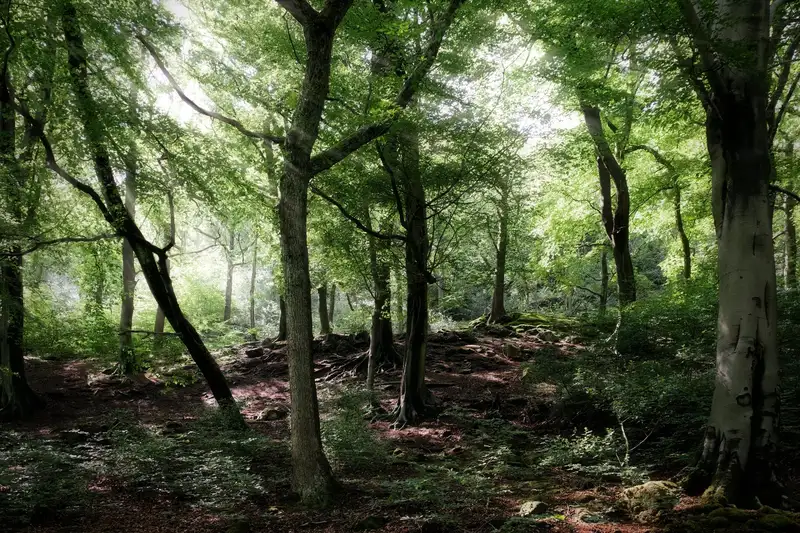
With a green burial, the grave is the place to visit, often marked by a tree or simple marker in a meadow or woodland.
With cremation, there is a place to visit if the ashes are buried. Many natural burial grounds accept ashes, so a cremation can still lead to a quiet spot in the same kind of landscape. If the ashes are scattered, there may be no single marked place, which matters to some families more than others.
What about the environment?
Ministry of Justice guidance notes that interest in natural burial has grown as people have become concerned about the emissions and fuel used in cremation, stone memorials shipped long distances, and the formaldehyde used in embalming, which can affect groundwater.
The environmental effect of either choice depends on the details. A green burial avoids embalming and headstones and uses land managed for wildlife. Coffin materials, travel and memorials all play a part. Be wary of any simple claim that one option is always greener.
What about faith and family?
Some faiths and traditions have firm views about burial or cremation. Islam and Orthodox Judaism require burial, for example, while Hindu and Sikh families usually choose cremation. If faith matters to you or your family, talk to your faith leader and to the burial ground early. Our guide to natural burial for every faith and none explains what to ask.
Family wishes matter too. Citizens Advice notes there is no legal obligation to follow a person's funeral instructions, though they usually are followed. Clear, written wishes make things easier for your family.
Can you combine the two?
Yes. One common path is a direct cremation followed by burying the ashes at a natural burial ground, with a gathering on that day. How this works is covered in ashes after a direct cremation. Couples sometimes make different choices, too: one cremated, the other buried, both resting in the same natural burial ground.
If neither feels right, there are other options, from burial at sea to leaving your body to medical science. See alternatives to burial and cremation.
How can you decide?
Questions to ask yourself:
- Do I want a single funeral day, or the freedom to gather later?
- How important is a place for people to visit?
- What can I, or my family, afford?
- Does my faith or my family's tradition point one way?
- Do I want to rest near someone in particular?
Whatever you choose, write it down, tell your family and keep it with your will. If you are leaning towards burial, browse green burial grounds that offer full burials; for either choice, you can compare natural burial grounds near you.
Common questions
Is green burial better for the environment than cremation?
It depends on the choices made. Concerns raised about funerals include the fuel and emissions of cremation, stone memorials shipped long distances and embalming chemicals. A green burial avoids embalming and headstones, but the coffin, travel and other choices matter too.
Is a green burial more expensive than cremation?
Often, though not always. SunLife's 2026 averages put a simple attended burial at £4,758 and a simple attended cremation at £3,518. Green burial prices vary widely, so compare itemised prices for the options you are considering.
Can I be cremated and still rest at a natural burial ground?
Yes. Many natural burial grounds accept ashes, so you can choose cremation and have your ashes buried there afterwards, sometimes in the same place as a partner.
Do my family have to follow my wishes?
Citizens Advice says there is no legal obligation to follow funeral instructions, but they usually are followed. Writing your wishes down and talking about them makes that much more likely.