
The short answer
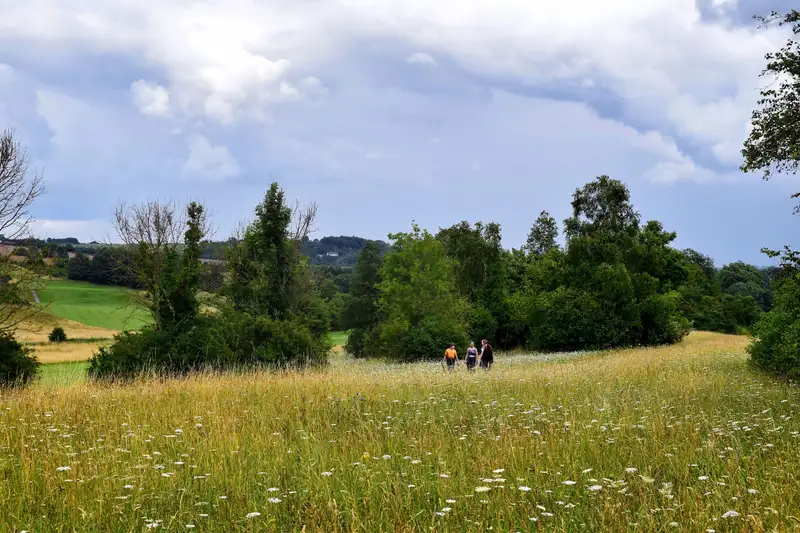
A green burial, also called a natural or woodland burial, is a burial in land managed for wildlife, such as a meadow or young woodland. The body is not usually embalmed, the coffin or shroud is biodegradable and memorials are simple or absent. Most green burial grounds welcome any faith or none, and many also accept ashes.
In a green burial, a person is buried in a way that does little harm to the land, and the burial ground is managed for wildlife as well as being a place to visit and remember. You will also hear it called natural burial, woodland burial or eco burial. These names describe broadly the same thing, and the places themselves are known as natural burial grounds or green burial grounds.
What makes a green burial different?
Ministry of Justice guidance for operators describes natural burial as burial where the land creates or protects habitat for wildlife, such as woodland or species-rich meadow, and where any funeral beforehand usually aims to keep its environmental impact low.
In practice, a green burial usually means:
- A biodegradable coffin or shroud. Wicker, cardboard, untreated wood and wool are common. Members of the Association of Natural Burial Grounds agree to accept a shroud instead of a coffin.
- No embalming. The same members agree to accept embalmed bodies only in exceptional circumstances, such as repatriation from abroad.
- Simple memorials, or none. A tree, a small wooden marker or a name on a shared memorial is typical, and some graves are left unmarked. Burial grounds keep a plan of where each grave is.
- Land managed for nature. Grass may be left to grow and cut only at certain times of year, trees and hedges may be planted, and wildlife is encouraged.
- Often, one person to a grave. Some sites, including some council woodland sections, dig each grave for one person only, so a couple would be buried side by side. Ask how the site does it.
What is a natural burial ground?
A natural burial ground is a place for burials where the land is managed as a habitat for wildlife rather than as a formal cemetery. Ministry of Justice guidance for operators gives woodland and species-rich meadow as examples. Some are whole sites in their own right, often on farmland or in existing woodland. Others are a natural or woodland section within a council cemetery.
Instead of rows of headstones, you will usually see long grass, wildflowers, young trees or established woodland, with paths mown through. Most take full burials, and many also accept ashes. Each site sets its own rules on coffins, markers and visiting, so it is worth asking before you choose.
Green funeral, eco burial, woodland burial: what's the difference?
These terms overlap and are often used to mean the same thing. Roughly:
- Green burial, natural burial and eco burial all describe burial in land managed for nature, without embalming and with a biodegradable coffin or shroud.
- Woodland burial usually means the grave is among trees, either in existing woodland or in a site where trees are planted, sometimes one on or near each grave. Some natural burial grounds are meadows with few or no trees, so ask if trees matter to you. See natural burial grounds where you can plant a memorial tree.
- A green funeral covers the whole funeral, not just the burial: the coffin, transport, flowers, the gathering and any memorial. The Ministry of Justice guidance describes natural burial as usually following a funeral that aims to keep its environmental impact low.
Because the names are used loosely, look at what each burial ground actually allows rather than the label it uses.
What's the most eco-friendly way to be buried?
There is no single official answer, and the details matter more than the label. Ministry of Justice guidance notes that interest in natural burial has grown because of concerns about the fuel and emissions of cremation, stone memorials shipped long distances and the formaldehyde used in embalming. Choices that keep the impact of a burial low include:
- no embalming
- a coffin or shroud made of natural, biodegradable materials
- a burial ground that is managed for wildlife, such as a member of the Association of Natural Burial Grounds, whose members agree to take reasonable steps to conserve wildlife
- a simple marker, a tree or no memorial instead of a headstone
- a burial ground close to home, so less travel for the funeral and for visits
If you are weighing burial against cremation, see green burial or cremation: how to decide. Be wary of any simple claim that one option is always greener.
Who runs green burial grounds?
The Natural Death Centre, a charity, says on its website that there are over 270 natural burial grounds in the UK. It reports that just over half are run by local authorities, often as a woodland or natural section of a council cemetery. The rest are run by landowners such as farmers, charitable trusts and non-profit organisations.
Many privately run sites, and some council sites, belong to the Association of Natural Burial Grounds (ANBG), which the Natural Death Centre set up in 1994. Members agree to follow its code of conduct. Among other things, they agree to:
- publish clear information about the site, its burial rights and whether plots can be bought in advance
- not require you to use a funeral director
- give a fully itemised price list on request
- take reasonable steps to conserve wildlife and manage the land sustainably
- have a complaints procedure
Not every well-run green burial ground is a member, so treat membership as one useful question rather than the only test.
What is a green burial funeral like?
There is no set format. Some families hold a service elsewhere first and then gather at the graveside. Others hold everything at the burial ground, at the grave itself or in a shelter or ceremony space if the site has one. Facilities vary a lot, so ask what there is.
A green burial can be religious, non-religious or a mix of both. Ministry of Justice guidance encourages operators to welcome enquiries from any faith group. If your faith has particular needs, such as timing or the direction of the grave, raise them early. See natural burial for every faith and none, or our guide to a non-religious or humanist natural burial.
Families are often more involved than at a conventional funeral. Depending on the site, you may be able to:
- carry the coffin and lower it into the grave yourselves
- help to backfill the grave
- choose readings, music or silence, led by a celebrant, a minister, a friend or no one
- take your time, without a tight time slot
The Natural Death Centre says natural burial grounds are generally used to families who bring the person who has passed away to the site themselves and make their own arrangements. What that involves is set out in arranging a green burial without a funeral director.
How much does a green burial cost?
Prices vary widely between council woodland sections and independent sites. The main parts are the grave, the digging or interment fee, the coffin or shroud and any funeral director. Our guide to the cost of a green burial explains each part, with published examples.
Can ashes be buried at a green burial ground too?
Many green burial grounds accept ashes as well as full burials, usually in smaller ashes plots or in an existing grave. That means a family can lay one person's ashes to rest now and later choose a full green burial in the same place. For other places ashes can go, see where you can bury ashes.
To find a site, see our list of green burial grounds that offer full burials or compare natural burial grounds near you.
New to all this? Our guide to how to start researching a green burial sets out the steps, and what ANBG membership means explains one of the checks you can make.
Common questions
Is natural burial the same as green burial?
Broadly, yes. Green burial, natural burial, woodland burial and eco burial all describe much the same thing. Details such as tree planting, markers and grave depth vary from one burial ground to another, so ask each site how it works.
Can a body be embalmed for a green burial?
Usually not. Members of the Association of Natural Burial Grounds agree to accept embalmed bodies only in exceptional circumstances, such as repatriation from abroad. If you are unsure, ask the burial ground before any arrangements are made.
Do you have to use a coffin?
Not always. Members of the Association of Natural Burial Grounds agree to accept a body wrapped in a shroud or other biodegradable wrapping instead of a coffin. Where a coffin is used, it should be made of natural materials.
Can ashes be buried at a green burial ground?
Many green burial grounds accept ashes as well as full burials, either in a small ashes plot or in an existing grave. Ask what container they need and whether ashes can be added to a full grave later.