
The short answer
Yes, many natural burial grounds and some woodland sites offer a native memorial tree with an ashes plot. Policies vary: some plant a tree on each plot, others in a shared area, and some not at all. Because ashes are highly alkaline and high in sodium, some sites place them a little away from the young tree's roots.
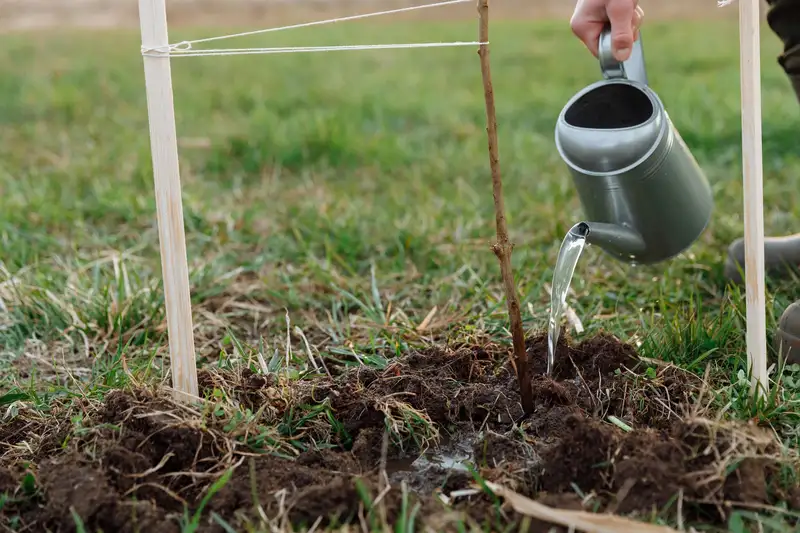
A memorial tree grows and changes with the seasons, gives shelter to wildlife and becomes a place to return to. Many families who choose a natural burial ground for ashes want a tree. This is how it usually works.
Where can you plant a memorial tree with ashes?
The most common options are:
- a natural burial ground that includes a tree with an ashes plot, or offers one for an extra fee
- a woodland burial area within a council cemetery
- your own garden, if you own the land. See our guide to burying ashes in your garden
You cannot plant a tree on land you do not own without permission, and conservation landowners often prefer other kinds of memorial. The Woodland Trust, for example, does not allow ashes to be scattered in ancient woodland or other sensitive habitats, and offers tree and woodland dedications as an alternative way to remember someone.
Does every natural burial ground plant trees?
No. The Natural Death Centre points out that if a tree on the grave matters to you, the burial ground closest to you may not offer it. Sites usually follow one of a few approaches:
- a new tree planted on or beside each plot
- a tree planted in a shared area of new woodland, rather than on the plot itself
- plots set among existing mature trees, with no new planting
- open meadow, where trees are not planted at all, to protect wildflowers
Each approach suits a different kind of landscape. A meadow may have no trees on purpose, because the wildflowers are the habitat being protected.
Which trees are usually offered?
Natural burial grounds generally offer native trees that suit their soil and the habitat they are creating. Ministry of Justice guidance for operators suggests an approved list of species, with an emphasis on native trees. Common choices include:
- English oak
- silver birch
- rowan
- hawthorn
- field maple
- wild cherry
- hazel
- crab apple
Ornamental or garden trees are rarely allowed. Many sites plant in the dormant season, roughly late autumn to early spring, so the tree may go in some weeks after the ashes.
Why do some sites plant near the ashes rather than on them?
People often assume the ashes will feed the tree, but the chemistry is more complicated. Eryri National Park Authority notes that ashes have high pH and sodium levels, and the Woodland Trust says ashes can change the chemistry of the soil. A concentrated amount of ashes right against a young tree's roots can make it harder for the tree to establish.
For that reason, some sites bury the ashes a short distance from where the tree is planted, or plant the tree beside the ashes rather than directly on top. Others mix the ashes into a wider area of soil. Specialist products that claim to neutralise ashes for planting are sold, but most natural burial grounds will simply advise on placement. Ask the site what it does and why.
If you are planting at home, the same principle applies: place the ashes a little away from the root ball and spread them through a wider area of soil rather than in one spot.
What should you ask before choosing a tree?
- Is a tree included, optional or not offered?
- Will it be planted on the plot, beside it or in a shared area?
- Which species can we choose from?
- When will it be planted, and can we be there?
- What happens if the tree dies?
- How will the woodland be managed as it grows? Ministry of Justice guidance notes that thinning can affect individual memorial trees.
- Can we add a marker, and what kind?
Our full checklist of questions to ask a burial ground covers plots, memorials and the long-term future of the site.
To find a site, see the natural burial grounds that offer memorial trees, or compare natural burial grounds near you and check which include a tree with an ashes plot.
Common questions
Do ashes help a tree grow?
Not directly. Ashes contain minerals such as calcium and phosphate, but they are also strongly alkaline and high in sodium, which can make it harder for young roots to take up nutrients if the ashes are concentrated in one spot.
Can I choose the type of tree?
Usually from a list. Natural burial grounds generally offer native species suited to their soil and habitat plans, such as oak, rowan, silver birch, hawthorn or field maple.
Will the tree have a plaque?
It depends on the site. Some allow a small wooden or stone marker, some keep a record but no marker, and some list names on a shared memorial instead.
What happens if the memorial tree dies?
Ask before you commit. Some sites replace trees that fail and others do not, and woodland may be thinned as it matures.