
The short answer
Visit before you decide if you can. Look at the approach and parking, the paths and how easy they are to walk, whether there is shelter, how graves are marked and recorded, how the land is managed and what it looks like in different seasons. Meet the people who run it, and ask for written policies and itemised prices.
Natural burial grounds can look very different from one another, and from the conventional cemeteries many of us know. Photos and websites only tell you so much. The Natural Death Centre says it is hugely important that a final resting place is right for you and your family, and strongly recommends visiting before the funeral to get the feel of a place that will be special to family and friends in the years to come.
A visit can be short and informal. You do not need to have decided anything, and a good burial ground will be glad to show you around.
Before you go
- Phone or email first, so you know someone will be there to meet you.
- Take someone with you if you can. A second pair of ears helps, and decisions are easier to talk through on the spot.
- Wear shoes you can walk in the grass or mud in. Many sites are fields or woods.
- Bring your questions. Our checklist of questions to ask a natural burial ground is a good place to start.
What to look at
Getting there and parking
How easy is the journey for the people who will visit most? Is there a clear sign and a road you are happy to drive on? Is there parking close to the burial area, and room for several cars on the day of a funeral? Members of the Association of Natural Burial Grounds agree to publish directions and details of any public transport links.
Paths, ground and access
Walk the route from the car park to the burial area. Is the surface firm, or soft and uneven? Is it steep? Could someone with a wheelchair, pushchair or walking stick manage it, and in wet weather? Ministry of Justice guidance says operators should tell people what provision is made for disabled access and recommends an access audit, so ask what has been done and whether help is available on the day.
Shelter and facilities
Ask what is on site: shelter from the weather, somewhere to gather, toilets, a chapel or room. Some sites keep man-made structures to a minimum, which is a choice, but you should know before the day. Members of the ANBG agree to publish what facilities are and are not provided.
How graves are marked and found
Natural burial grounds often have no headstones. Ask how each grave is marked, for example with a tree, a small wooden plaque or nothing at all, and how the exact spot is recorded. The Ministry of Justice suggests operators survey each plot and record its coordinates, because trees and plants change a site over time, and keep a copy of the plan off site. Ask how you would find the grave in ten years' time.
The land
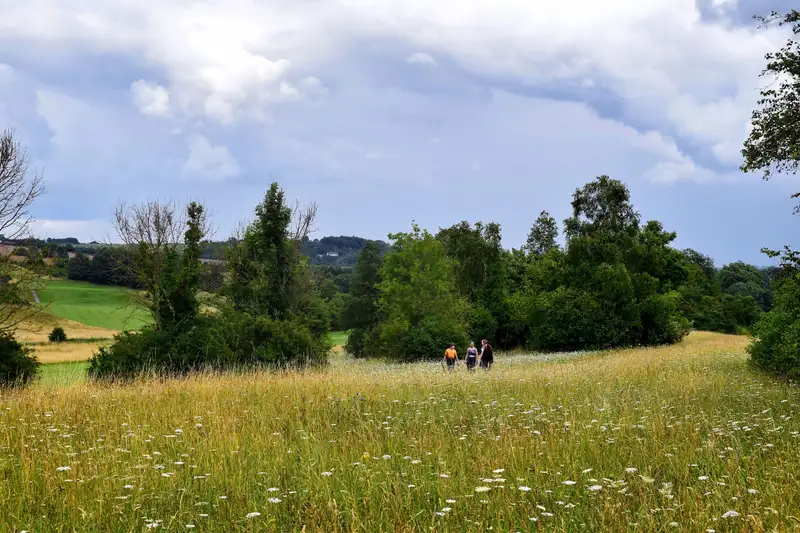
Look at how the land is managed. Is it a meadow, a young wood or an older wood? Does it look cared for? Ask how it is managed for wildlife and what the plans are for the long term, including when the site is full. Ask how it looks through the year. A wildflower meadow may only be cut once a year, which can be a shock in July if you only saw it in winter.
Memorials, trees and flowers
Ask what you can and cannot leave: a tree, a plaque, a bench, flowers. Check the rules on plastic wrapping and non-native plants before you buy cut flowers or plants. Ask whether the site plants a tree, and what happens to it if it dies or the wood is thinned.
The people
Meet the person who runs the site. The Natural Death Centre points out that a relationship with the manager can give you information that a funeral director alone may not be able to offer. Notice how clearly they answer, and whether they give you written information.
Choosing the exact spot
Some sites let families choose where a grave or ashes plot goes, within the section being used. The Natural Death Centre notes that it may be possible to choose the exact location. Ask whether you can, and whether the spot is held for you once you have chosen it.
Visiting after the burial
Ask about access rights before you buy: when you can visit, whether the site is open all year, and whether there are restrictions. The Ministry of Justice notes that bereaved people will expect access, so operators should tell families about access rights and any restrictions. Where a site is within a council cemetery, the cemetery's own regulations apply. Our guide to council natural burial areas explains what to check.
What to ask for before you leave
- A written price list that is fully itemised. See the cost of a green burial and the cost of burying ashes for what the main charges are.
- The site's information sheet or booklet, or its written policies.
- The burial rights terms: how long the right lasts, and what it includes.
- Whether the site is a member of the Association of Natural Burial Grounds. See what ANBG membership means.
If you cannot visit in person, ask for photos, an information sheet and a phone call instead.
After your visits
Write down what you noticed while it is fresh, and compare sites against what matters most to you. If you are early in your research, how to start researching a green burial sets out the whole process, and you can compare natural burial grounds near you.
Common questions
Should I visit a natural burial ground before choosing?
Yes, if you can. The Natural Death Centre strongly recommends it, to see what a site looks and feels like, to meet the people who run it and to ask about the future of the land. It may also be possible to choose the exact location of a grave.
What time of year is best to visit?
Any time helps, but think about the seasons. The Natural Death Centre notes that a wildflower meadow may only be cut once a year, which can be a shock in July if you only saw it in winter. Ask how the site looks across the year.
How can I check a natural burial ground is accessible?
Ask about parking, the surface and gradient of paths, and whether there is help on the day. Ministry of Justice guidance says operators should make sure people know what provision is made for disabled access, and members of the Association of Natural Burial Grounds publish information on facilities such as parking, shelter and toilets.
What if I cannot visit in person?
Ask for an information sheet or booklet, photos, and a phone call with the person who runs the site. Ministry of Justice guidance recommends that operators provide an information sheet that describes the service in full.
Can I visit a grave whenever I like?
It depends on the site. Operators should tell families about access rights and any restrictions, such as opening hours. Council cemeteries apply their own regulations. Ask before you buy a plot.