
The short answer
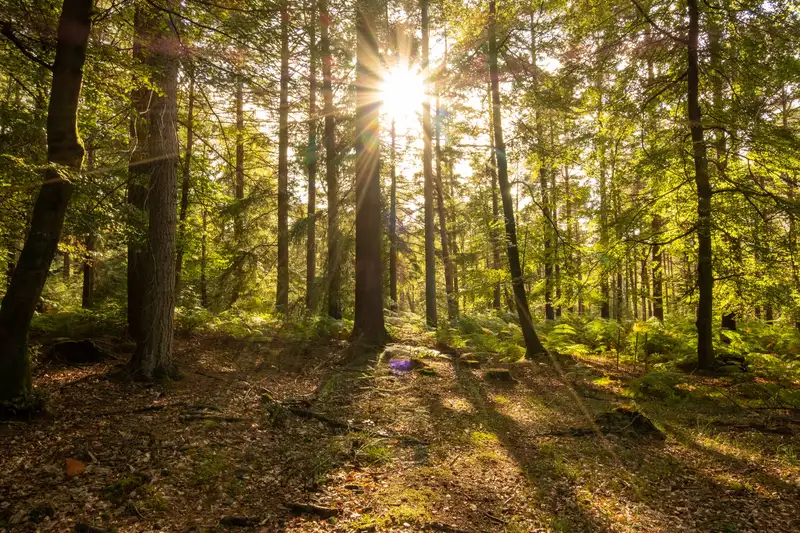
A woodland burial is a natural burial in woodland or in land being planted as woodland. The body is usually buried in a biodegradable coffin or shroud without embalming, in a shallow grave marked with a tree, a small plaque or nothing. Sites range from mature woods to new plantings and meadows, so check how each one is managed.
Woodland burial is one of the most searched names for natural burial in the UK, and it is also one of the least precise. This guide explains what the term usually covers, what to expect at a site, and how to find and compare woodland burial grounds.
What is a woodland burial?
A woodland burial is a burial in a wood, or in land that is being planted as woodland. It is a form of natural burial. The Ministry of Justice's guidance for operators defines natural burial as burial where the area creates habitat for wildlife or preserves existing habitats such as woodland, species-rich meadows and orchards, and says the terms green burial, green funeral and woodland burial are also sometimes used.
"Woodland" does not always mean an old forest. The Natural Death Centre describes sites that are mown wildflower meadows, fields where new woodland is being established, existing woodland, or more manicured parkland. If you want to be among mature trees, ask how old the planting is.
The idea began in a council cemetery. According to the Ministry of Justice, the first natural burial ground in the UK opened in 1993 in a woodland site on an unused part of Carlisle's municipal cemetery, and many other councils followed.
What is a woodland burial like?
Details differ from site to site, but you will often find:
- No embalming. Embalming fluids can contain harmful chemicals, and Cornwall Council lists "no embalming fluids" as a usual feature of green burial.
- A biodegradable coffin or shroud. Cornwall Council's examples include wicker, willow, bamboo, cardboard, solid untreated wood, cotton and wool.
- Shallow graves. These allow natural decomposition and enrich the soil.
- Simple markers, or none. Instead of headstones, a grave may be marked with a small wooden plaque, a tree or wildflowers, or left unmarked with its location recorded by GPS.
The Natural Death Centre describes two broad kinds of site. In truly natural, nature-reserve style grounds, embalming is not allowed and coffins must be biodegradable. At others, a tree is planted but no other environmentally friendly rules apply. It is worth asking which kind you are looking at. Our guide to what makes a green burial goes into more detail.
Can I have a tree?
Some woodland burial grounds plant a memorial tree on or beside each grave, some plant trees in shared areas, and some do not offer one. The Natural Death Centre notes that if you want a tree planted on the grave, the burial ground closest to you may not offer it. See tree burial in the UK for the questions to ask.
Can ashes be buried in woodland?
Many woodland and other natural burial grounds accept ashes, usually in a smaller plot, and some let you reserve a grave nearby for later. Our guides to burying ashes at a natural burial ground and to burying ashes now and planning a green burial later cover the options.
What does it cost?
Costs vary between sites, and between private sites and council ones. Cornwall Council says costs are often comparable to or lower than traditional funerals, and typically include a burial plot fee, an interment fee, and optional extras such as a simple marker or memorial. Ask each site for a fully itemised price. See the cost of a green burial and the cost of burying ashes for typical figures.
How to find woodland burial near you
- Search by postcode. Compare natural burial grounds near you lists members of the Association of Natural Burial Grounds by distance.
- Check your council. Many councils set aside a woodland or natural area in a cemetery. Our guide to council natural burial areas shows how to find yours.
- Use more than one directory. The Natural Death Centre keeps a list of natural burial grounds, and the Natural Burial Alliance has a directory that it says is not yet complete.
Before you decide, read how to start researching a green burial, use our questions to ask a natural burial ground, and try to visit the site first.
Common questions
Is a woodland burial the same as a natural burial?
Broadly, yes. Ministry of Justice guidance defines natural burial as burial where the land creates or protects habitat for wildlife, and notes that green burial, green funeral and woodland burial are also used. In practice a woodland burial ground may be a mature wood, new tree planting or a meadow.
Does a woodland burial always mean a tree on the grave?
No. The Natural Death Centre describes some sites where a tree is planted but no other environmentally friendly rules apply, and others run as nature reserves with simple markers. Planting and memorial policies vary, so ask each site what it offers.
Can ashes be buried in a woodland burial ground?
Many woodland and other natural burial grounds accept ashes as well as full burials, in a smaller ashes plot. Ask whether ashes can be poured or need a biodegradable urn, and whether a tree or marker is allowed.
Is a woodland burial cheaper than a traditional burial?
It can be. Cornwall Council says green burial costs are often comparable to or lower than traditional funerals, though costs vary by site. Ask for an itemised price covering the plot, interment and any marker or tree.
How do I find a woodland burial ground near me?
Use a directory such as the Natural Death Centre's list, check your council's website for a woodland area in its cemeteries, and search our postcode finder for members of the Association of Natural Burial Grounds near you.